01 · preserve
Preserving data & media
We keep digital and digitized material intact and usable over the long term — ingest, fixity checking, format identification and normalization, and workflows built to survive decades, not quarters.
Preserve, then make accessible
Long-term preservation and access are two halves of one lifecycle. Data Tango does both: we keep digital and digitized material intact over time, then build the layer that makes it accessible to the world.
What we do
Preservation and access are not separate service lines — they are the two halves of one lifecycle. You keep material safe, and then you make it accessible.
01 · preserve
We keep digital and digitized material intact and usable over the long term — ingest, fixity checking, format identification and normalization, and workflows built to survive decades, not quarters.
02 · access
Then we build the layer that makes preserved material accessible — viewers, APIs, and interfaces that make collections explorable, with IIIF as the headline capability you can try right here.
The value is in the connection between the two: few do preservation and access end to end. See the access half in action
The playground
Our live IIIF viewer comes loaded with three collection items from libraries and museums — and it will just as happily render a manifest from your own institution. This is the access half, working in your browser.
A demonstration
A public-domain work, served through the IIIF Image API and presented the way a gallery would: matted, framed, and captioned with its provenance.
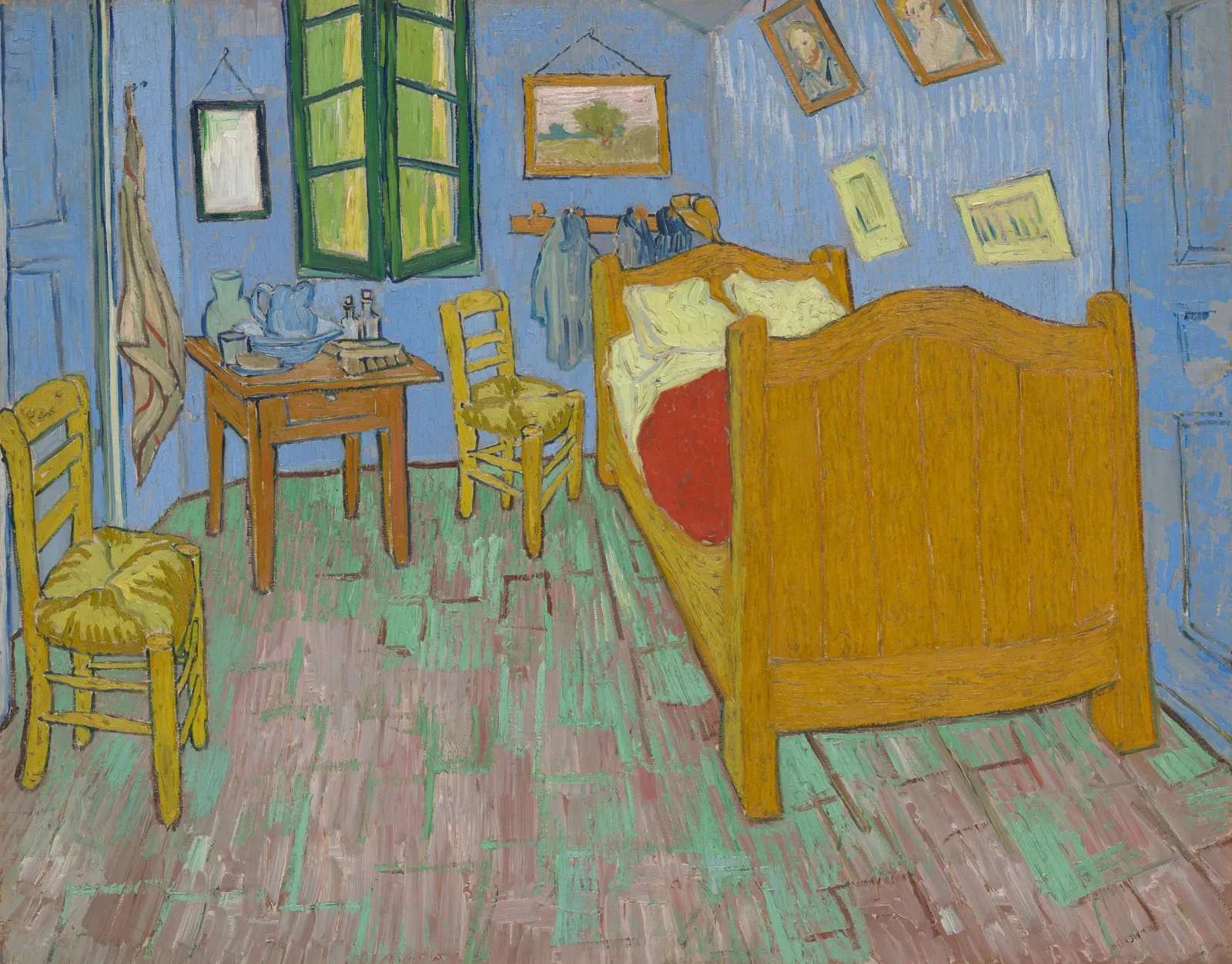
The Bedroom
Vincent van Gogh (Dutch, 1853–1890)
Find our work
Data Tango is early, with no client logos to parade. We think that's the wrong proof anyway. Judge us on work you can open and inspect.
A live viewer that renders any institution's manifest, including yours.
Our open work, in the open — the way this community evaluates competence.
Contact
Whether it's a collection that needs preserving, material that needs access, or a IIIF question you've been circling, we'd like to hear about it.
Prefer to look at code first? Find us on GitHub.